
Uncertainty is no longer a phase — it’s our life
Most organisations are no longer navigating occasional change.
They are operating in continuous uncertainty.
Markets shift faster. New technologies emerge quickly. People are more stretched.
And yet many leaders try to lead with a one-dimensional approach that worked for them in a one-off change initiative in a stable environment.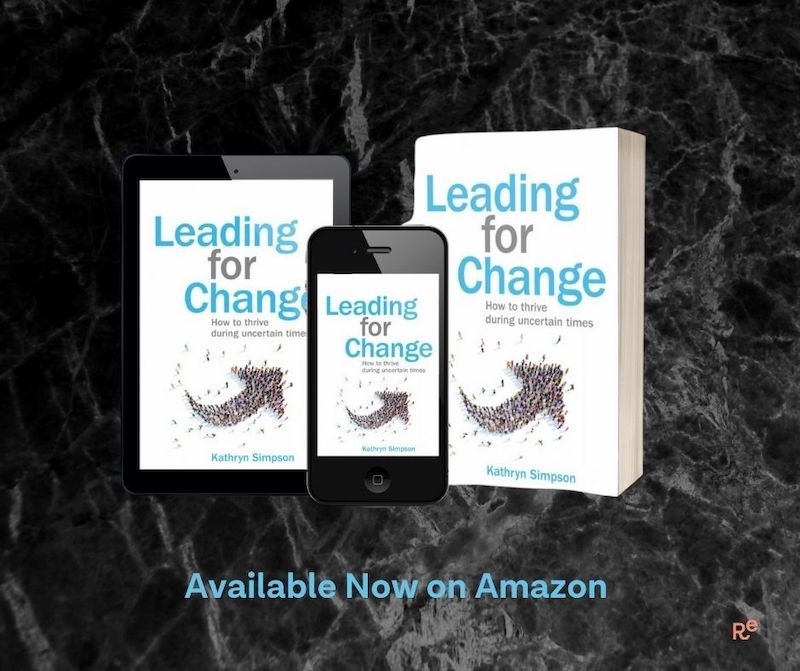
The challenge was never about “managing change.” Now more than ever it’s about Leading for Change and learning how to create clarity, momentum and trust in faced paced environments.
This article shares some relevant insights from Leading for Change – How to Thrive During Uncertain Times. We will explore what lessons can be learnt from past experiences and how these can be adapted and used in today’s uncertain environment.
The carousel below shows the questions that are covered here and the eight success factors that are covered in the book “Leading for Change – how to thrive during uncertain times”.
Having a vision remains critical
Given the constant shift in environment – is having a vision still useful? Surely we just need to react to our current environment and remain agile to take advantage of the opportunities that present themselves?

I’d argue that having a vision is even more critical to create confidence about the future. It enables
- Creation of a leadership position in our markets
- Alignment of everyone in the organization
- Delivery of outcomes to all stakeholders
To create a vision that will enable success we need to include different perspectives in its development. A vision should inspire all stakeholders. Co creation is a powerful start to buy in and alignment.
Our journey towards that vision will no longer be as linear as it was. Events in the environment will cause necessary course corrections and we will need to be agile in our response. With AI impacting us all we will also need to create boundaries for how change will happen.
Having a stable vision enables us to lead change in a way that is disciplined and thoughtful as well as reactive.
We need to decide how we bring others along with us on our journey to success. Choosing how to change remains critical for leaders.
Why do people resist change
“We need people to be more resilient to change.”
It’s a phrase we hear often. As leaders if we hire more resilient people then maybe change will be more easily implemented? I don’t think it is as simple as that.

I see resistance as a positive part of leading change. If you listen to why people are resisting, you can figure out how to manage. It could mean creating a better solution or simply gaining more buy in as people’s voices are heard.
In many organisations, the real issue isn’t resistance to change itself.
People usually adapt remarkably well when:
✔ they understand why change is happening
✔ they feel involved in the process
✔ they trust leadership
✔ they can see progress
What creates frustration is if the reasons for the change aren’t deeply understood and there has been no chance for two-way dialogue.
Leaders need to consciously choose and customize an approach for change so that people feel that they have had an opportunity to be involved. This will be different depending on the impact of the change to them, and their capacity to undergo more change.
Clarity in translation is critical
Most leadership teams don’t struggle to create strategy.
They struggle to translate it into everyday action.

A strategy can sound compelling in the boardroom but still feel disconnected to the people expected to deliver it.
That’s where change efforts often stall.
Successful transformation happens when leaders help people answer three simple questions:
- Why is this important?
- What does this mean for me?
- What should I do differently tomorrow?
The gap between strategy and execution is usually about leaders making sure that their teams are clear about what they need to do and are motivated to do it.
The most effective leaders involve people to help them connect the “big picture” to practical behaviours, priorities and decisions across teams. Leaders and teams get clearer about change as two-way dialogue unfolds.
Change only becomes real when it changes how people work day to day.
Creating momentum by reinforcing success
“What gets measured gets done”. Not many people argue with this long-standing maxim, but it is surprising how infrequently it is applied.

During uncertainty, people don’t just need presentations about the future. They need evidence that progress is being made. Business measures and behavioural change can demonstrate this.
Measurements of success clarify desired results
- Measure success from different stakeholder’s perspectives
- Build measurements into team and individuals performance measures
- Take action, don’t just measure and analyze
Change behaviours in line with a desired future, otherwise people will revert to their current ways of working
- Communicate what behaviours are needed
- Role model desired behaviours
- Recognize behaviours that are making a difference
Reinforce and build momentum through story telling
- Communicate early wins and then consistently share
- Use measurements to demonstrate change
- Share examples of behavioural changes
Thriving through uncertainty isn’t about having certainty
We can learn to thrive in uncertainty by learning from the past and adapting for the future.
Although our environment is changing, we can build on our own and others past experiences by tapping into a wide network of people who have gone through various transitions.

Leading through change today is not about navigating a single transition but about building a culture of trust and learning. If you can achieve this then you can move forward at pace and with confidence.
Thriving leaders engage others in the journey and create confidence about the future, rather than having all the answers and pretending certainty. They recognize today’s challenges and acknowledge the uncertain environment, and are clear about what’s needed for success:
In uncertain times, leadership is less about predicting the future — and more about helping people navigate it together.
How will you thrive in today’s uncertain environment?