
Why isn’t it easy working across organisational boundaries? How can we accelerate ways of working that will get us to our common goals?
Recently Jackie Macritchie Jonathan Betts James Edgar Liz Mortimer-Cassen and I got together to reflect on these questions. 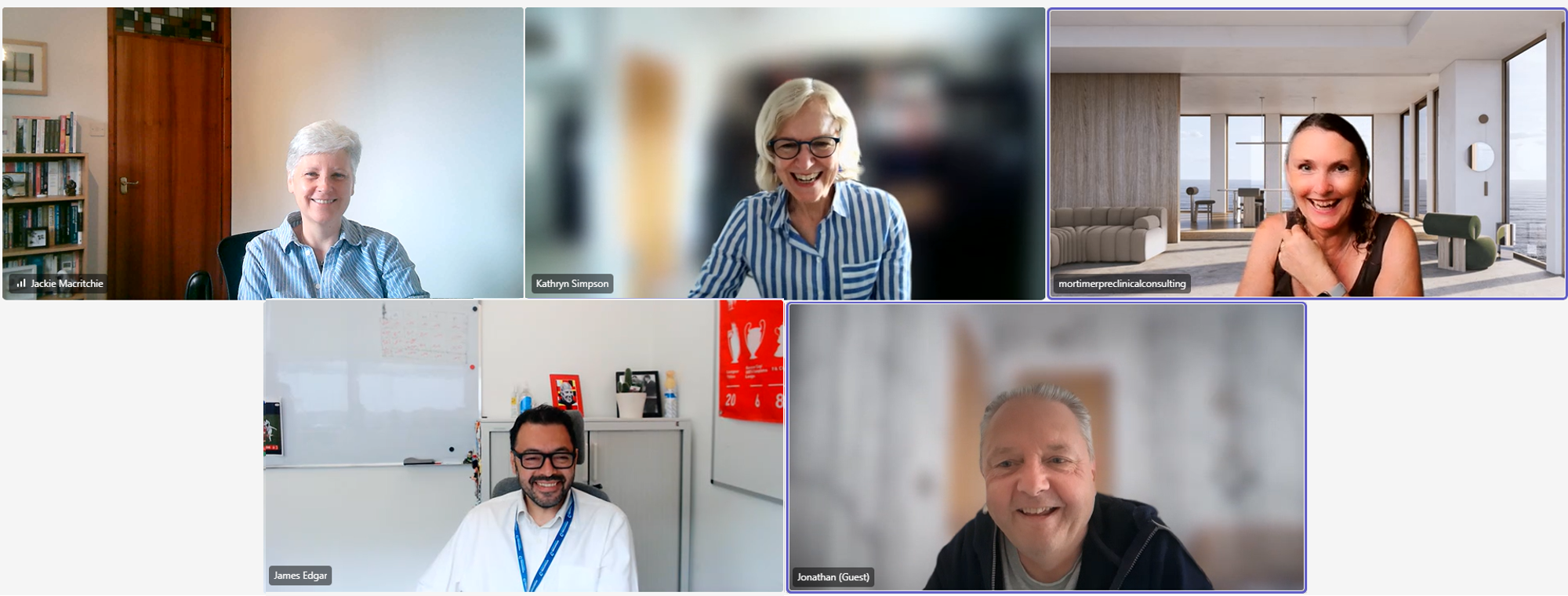
Firstly, we considered why it’s so hard:
- Common goals might not be common! Different stakeholders may have different objectives for why they want to partner
- Cultures of different organizations might clash. For example, small organizations are typically more agile and pivot to achieve goals more quickly. Academia and biotech have very different timelines and perspectives.
- Different functional expertise’s have different languages which don’t easily translate. Scientists and bankers may need to spend time to understand the jargon that is used. This was explored further in a great article by Jonathan that concluded: Markets don’t require consensus. They require compatibility.
- Individuals don’t trust each other. This is a hard issue to address but until trust grows then people will not work together and duplication of effort and conflict arise
If it’s so hard to work together, what can we do to be more effective rather than struggling through challenges one by one? Considering the idea that we may not be striving for complete consensus but compatibility. We think the following approaches (used across functions and across organizations) are useful:
- Use a new manager assimilation process. This is a tool that to brings new managers into a team quickly. It creates expectations on both sides as new managers describe their needs from a team, and the team shares what it needs from a manager. This could be used across organisations to create a team charter including ways of working that lead to faster success
- Use the trust equation. Developed by Charles Green and David Meister many years ago this enables people to self-assess and discuss with others the specifics of building and eroding trust.
- Understand that there are natural phases that teams go through as they form storm norm and perform. Spend time up front so that teams have the language to address.
- Actively reflect on your “best team ever” experiences. Share with your new team so that you can recreate.
- Pay attention to the language you are using. Ensure acronyms are understood. Consider how as a leader you can increase your cross functional and organizational language and communicate more effectively
- Step into other people’s shoes. Using Constellations is a good way to come out of your own perspective and think about things from very different perspectives. Everyone sees things in a different way.