
Have you ever suffered from imposter syndrome? Or known someone who does?
It’s a term that is widely used when people take on new roles or tasks and wonder if they can meet expectations. Sometimes it stops us saying yes to opportunities that will stretch us beyond our comfort zone.
Jackie Macritchie Jonathan Betts and I debated whether we could reframe imposter syndrome to being an opportunity to become more self-aware.
Why is it that we believe we cannot do things? What would happen if we asked ourselves why we believe this?
Is it confidence or is there a capability gap? If its confidence then we can reassure ourselves, with others support (feedback from coaches, managers, customers, peers) that we can do this. If there is a gap, we could take action to close the gap on the job, (by coaching, mentoring or formal training).
Self-awareness and being confident about our own strengths and gaps are key to success. It enables us to avoid falling into ongoing imposter syndrome.
Self-awareness becomes even more critical as a leader. You don’t have to have all the skills that are needed for a successful team, department or company. Instead, you surround yourself with people who bring expertise in specific capabilities, and you enable them to work together. This is the optimum way to grow capabilities for the organization and helps you realize you don’t have to be an expert on everything.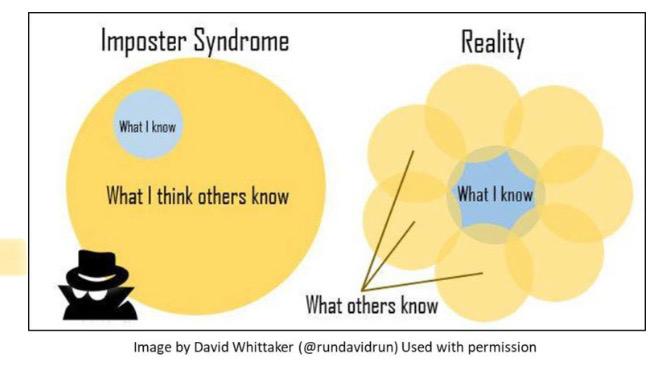
The model in the picture (Thanks to David Whittaker) describes perception of your capability vs reality. The essence is that you can perceive you know very little whilst those around you know so much more. The reality is that others bring specialist expertise which is different to yours and that together you can increase the collective capability.
Being aware and comfortable with the capabilities you have and the resources and capabilities that others around bring addresses both your confidence and any capability gaps.