
More people are moving from corporate roles to being a consultant. Whether it’s to have the freedom to decide, to transition to retirement or because redundancy has forced this decision, being a consultant can seem an attractive career choice.
The reality is that this can be the biggest career transition you will ever make. Why? Your skills of being a consultant may need to be developed and most importantly your mindset will need to change. Leading your own personal change become critical.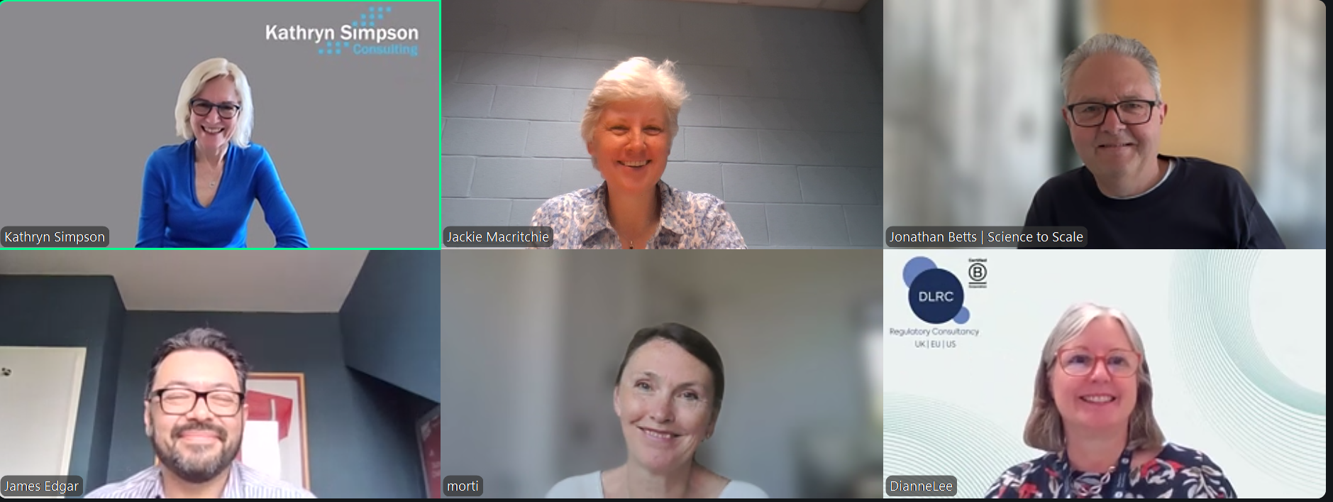
Recently Jackie Macritchie, Jonathan Betts Dianne Lee James Edgar Liz Mortimer-Cassen and I shared our stories and insights. We discussed what we had learnt as independents or what we have seen as we have worked with them.
There are five main change categories
- Become a commercial leader
- Scope projects and deliver against what you promise
- Build your backroom infrastructure
- Build and sustain your relationships
- Create a consulting mindset.
In this article we share some insights for each category:
- Become a commercial leader
- Be clear about your value. Provide a hook for potential buyers so they think about you as they solve problems.
- Identify your ideal client archetype. What characteristics do they have? Why would they buy from you?
- Market yourself. Create visibility through speaking, writing or referrals.
- Define your business model. Are you more like a contractor working on a single contract full time, or a coach with many clients at a time?
- Say no to work that doesn’t align with your values or your purpose. Which clients will you allow on your red carpet? If you don’t say no you may find yourself doing work that does not align with your purpose and is not as fulfilling. This could create a downward spiral as people ask what you are currently doing / what your last job is.
- Don’t underestimate your value. Price your work in line with the market. Getting this wrong cannot only impact you affect others in the market. Avoid “mates rates” unless there is a clear business rationale.
- Know when to pivot as times change and when to persevere. Keeping consistent with your brand is important but so is offering products and services that provide value in changing times.
2. Scope projects and deliver against what you promise

This is the core of your consulting business. It is critical, as if you don’t get this right, then client satisfaction and cost effectiveness are at risk. We have learnt to:
- Diagnose quickly what is needed and be comfortable with ambiguity.
- Clearly define upfront what will be delivered and what assumptions you are making. If these change then you can recontract. Be transparent.
- Focus on outcomes and share back as they are delivered. Don’t strive for perfection – progress is often more valued. Check in to see what is really needed and look for clients taking ownership as your project moves into the business.
- Follow up to get feedback so you can improve your performance, get testimonials and identify how you can continue to partner.
- Build your backroom infrastructure

As a freelance consultant you are accountable for all business activities that may have been provided for you in a corporate role. These tasks maybe less glamorous but are often what determines sustainability.
- Identify what infrastructure you need. Keep it simple and cost effective. Decide what you will outsource vs doing yourself.
- Manage your cashflow. Have a system for proposing, invoicing and being paid. Control expenses.
- Set up your business to pay appropriate taxes, consider IR35 compliance, and align the geography and scope of your insurance.
- Time box your work. Schedule your week for consulting delivery, admin, business development and personal time so you can deliver effectively and have the freedom you need. Make sure you have time to work on your business as well as working in your business.
4. Build and sustain your relationships
Relationships underpin the whole of your consulting business and are something that needs continued attention. Your network has never been so important!

When you are consulting there are many stakeholders to consider, so here’s why each of those groups may be important:
- Your consulting peers. Especially on start-up, their advice and support are invaluable. With ongoing changes in legislation, the market and business environment you can share information to keep you up to date. You can also share opportunities and partner on delivery.
- Consulting partners. Boutique consultants can be a source of ongoing work and you can also refer onto them when opportunities come up that you don’t have the capacity for or that don’t fit your model.
- Existing and potential clients. Keep in touch and build relationships before you aggressively sell. Scattering seeds is important before decisions are made. Keep in touch with existing and past clients, they are your best source of referrals and testimonials,
- Formal / informal networks. Whether industry associations, peer networks or functional expertise, active participation (including volunteering) is a way of building and sustaining relationships in each of the above.
- Create a consulting mindset.
Adopting and embedding a consulting mindset could be the most impactful of all our learnings!
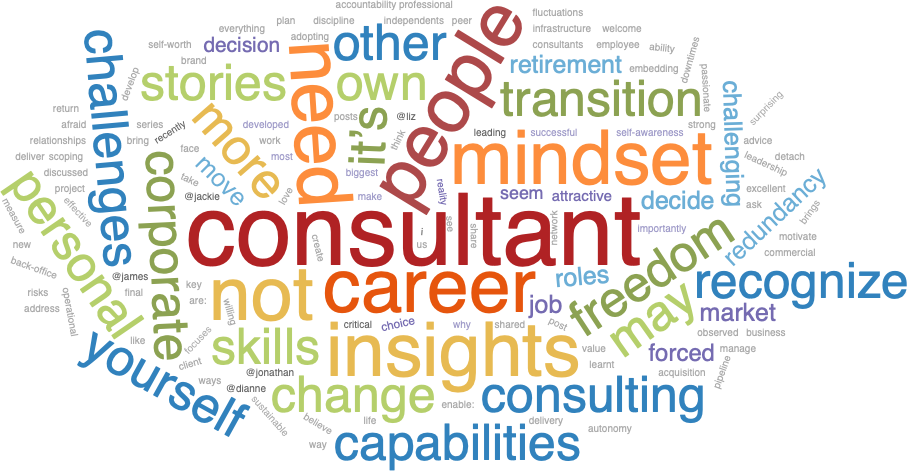 A consulting mindset can enable each of the topics we have discussed above:
- Strong commercial leadership skills and client acquisition capabilities
- Excellent project scoping and delivery discipline
- Effective operational and back-office infrastructure
- Sustainable relationships
Our key insights are:
- Believe in yourself and the value you bring. Create ways to motivate yourself and be passionate.
- Own your brand and think like a peer not an employee.
- Don’t be afraid to ask for the advice of others. People are willing to share. You don’t have to know everything.
- Take accountability for your business and manage your risks.
- Recognize that you will need to develop new capabilities and have a personal / professional plan to address.
- Detach your self-worth from pipeline fluctuations. There will be downtimes. Recognize that this is not a measure of your ability to deliver.
Given all these challenges it’s not surprising that people return to their life in corporate. For those of us who love the freedom and autonomy that this career brings we wouldn’t have it any other way!